Home › Common Problems › Fence Damage from Tree Roots or Falling Limbs
Fence Damage from Tree Roots or Falling Limbs
in Pearland, TX
Pearland has a lot of mature trees, particularly in older parts of town, and tree roots do not stop growing when they hit a fence post. The heavy clay soil here concentrates root growth near the surface because deep soil layers stay oxygen-poor and wet, so roots spread wide and shallow. That puts them right in the path of fence footings. Separately, the severe thunderstorms that roll through Pearland from spring through fall break large limbs and drop them onto fences with enough force to crack rails and split boards.
Pearland Fence Repair Pros helps Pearland, TX homeowners fix fence damage from tree roots or falling limbs — call for a free inspection.
Quick Answer
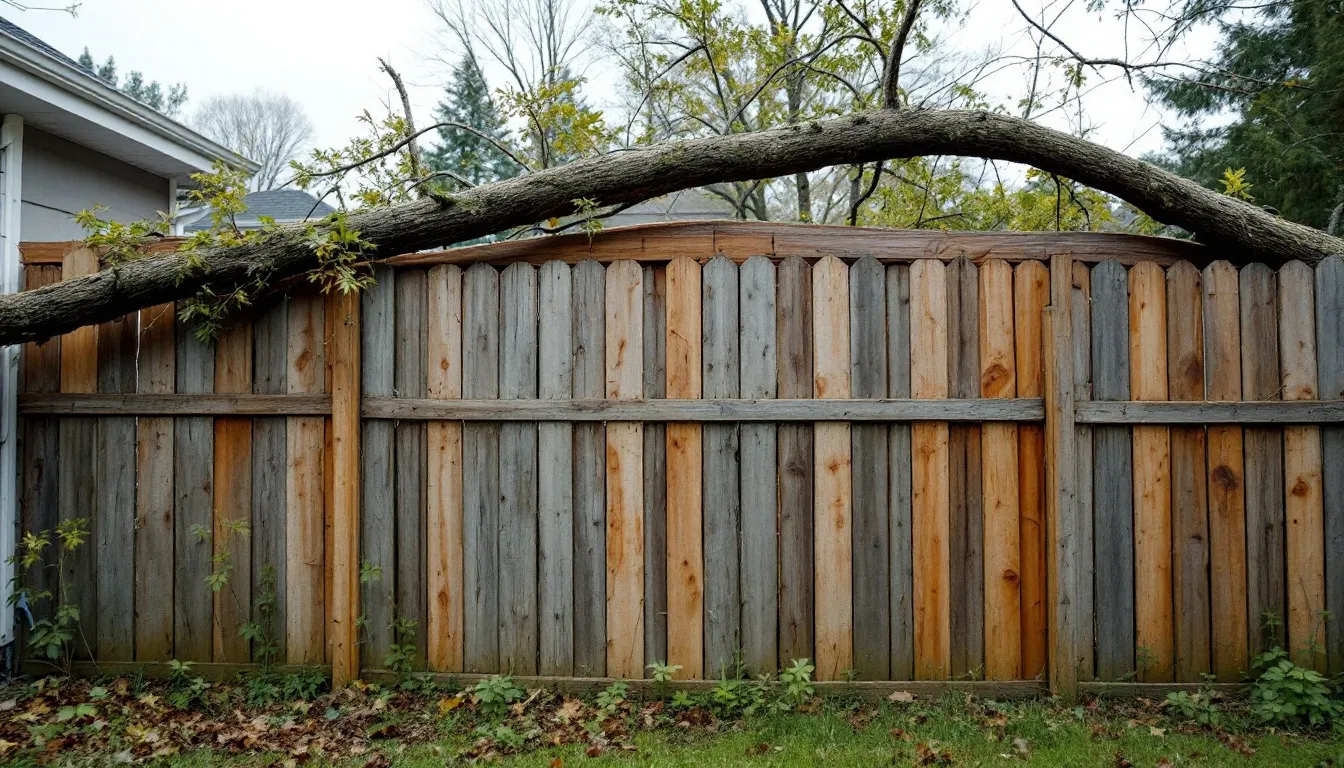
Tree roots push fence posts up and out of line in Pearland, especially in older neighborhoods like Old Townsite where large oaks and pecans have had decades to spread. Falling limbs are a separate problem and usually cause sudden board and rail damage after a storm. Root damage means the post has to be moved or the root situation has to be resolved first. Limb damage is a straightforward board and rail replacement, but check the posts underneath before you assume they are still solid.
Telltale Signs
Warning Signs to Watch For
- Post is heaving upward and tilting while nearby soil is cracked or raised
- Root mass visible at the surface running directly under or through the fence line
- Rail or board cracked in a single clean break, not rotted, pointing to impact damage
- Fence section pushed sideways in an arc following the curve of a nearby tree trunk
- Posts in the same area as a large tree are higher than posts further away
- Fresh wood exposed on broken boards after a storm with no long-term weathering
Root Causes
What Causes Fence Damage from Tree Roots or Falling Limbs?
Root Growth Under Footings
In older Pearland neighborhoods, large pecans and live oaks spread roots 2 to 3 times the width of their canopy. Roots grow under fence footings in the shallow clay layer and then thicken over years, lifting the footing and tilting the post the way a wedge lifts a rock.
The Fix
Post Relocation or Root Management
Posts being heaved by roots need to be moved to a location clear of the root zone, or the specific roots contacting the footing need to be cut back in coordination with an arborist. A relocated post gets a fresh footing in undisturbed soil away from the root path.
Storm Limb Impact
Pearland gets severe thunderstorms with straight-line winds multiple times a year between April and October. A limb from a pecan or pine tree falling 20 or 30 feet lands with enough force to snap a rail, punch through a board, or knock a post out of plumb even if the post itself was solid.
The Fix
Rail and Board Replacement with Post Inspection
Broken rails and boards are replaced, and the post at the impact point is checked for cracking or movement in the footing. A post that absorbed a hard impact may look fine but have a crack at the soil line that will fail in the next storm.
Self-Diagnosis
Which Cause Applies to You?
Check the signs you're observing to narrow down the likely root cause before your inspection.
| What You're Seeing | Root Growth Under Footings | Storm Limb Impact |
|---|---|---|
| Post rising out of the ground with no storm event causing it | ||
| Multiple boards broken or cracked in one spot right after a storm | ||
| Fence line curves near a large tree while the rest of the line is straight | ||
| Rail snapped but wood is still fresh and shows no rot | ||
| Surface roots visible above ground running parallel to the fence for several feet |
Free Quote
Get a free quote in Pearland
No obligation — tell us what's going on and we'll text you back shortly.
Other Problems
Services That Fix This
Fence Damage from Tree Roots or Falling Limbs Near You
Also Helpful